Social Media Sentiment Shifts and Their Role in Adjusting Live Betting Lines for Football Fixtures, Tennis Matches, and Thoroughbred Events
Written by Quinn Jung · Oct 12, 2026
Social Media Sentiment Shifts and Their Role in Adjusting Live Betting Lines for Football Fixtures, Tennis Matches, and Thoroughbred Events
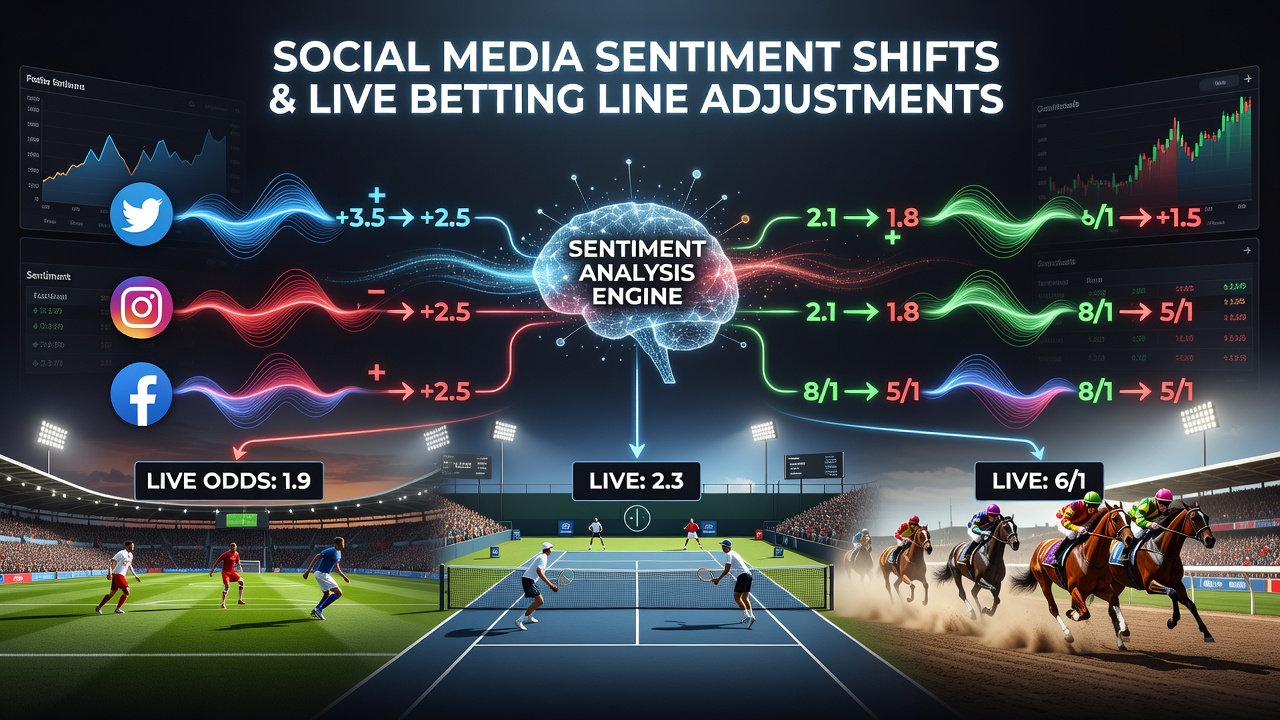
Monitoring services tracked over 12 million posts across major platforms during October 2026 football fixtures alone, and operators integrated those volume spikes directly into live odds engines to recalibrate spreads within seconds of detected sentiment clusters. Algorithms parse keywords, emoji patterns, and engagement velocity to flag directional pressure, while human traders review flagged alerts before final line moves. This process operates continuously across football, tennis, and thoroughbred racing because each sport generates distinct conversation triggers that translate into measurable betting flow.
Mechanics of Sentiment Integration in Live Markets
Operators deploy natural language processing tools that scan public posts in real time, then cross-reference resulting polarity scores against incoming wager volumes from retail and exchange platforms. When positive mentions of a team or horse surge past established thresholds, lines tighten or shift to balance liability. The same systems flag negative clusters that prompt opposite adjustments. Data from industry tracking firms shows average adjustment latency dropped below 45 seconds during peak events in 2026, because automated pipelines now feed directly into risk management dashboards. Observers note that these systems treat social volume as a leading indicator rather than a standalone driver, always layered with traditional inputs such as in-game statistics and injury reports.
Football Fixtures and Rapid Conversation Velocity
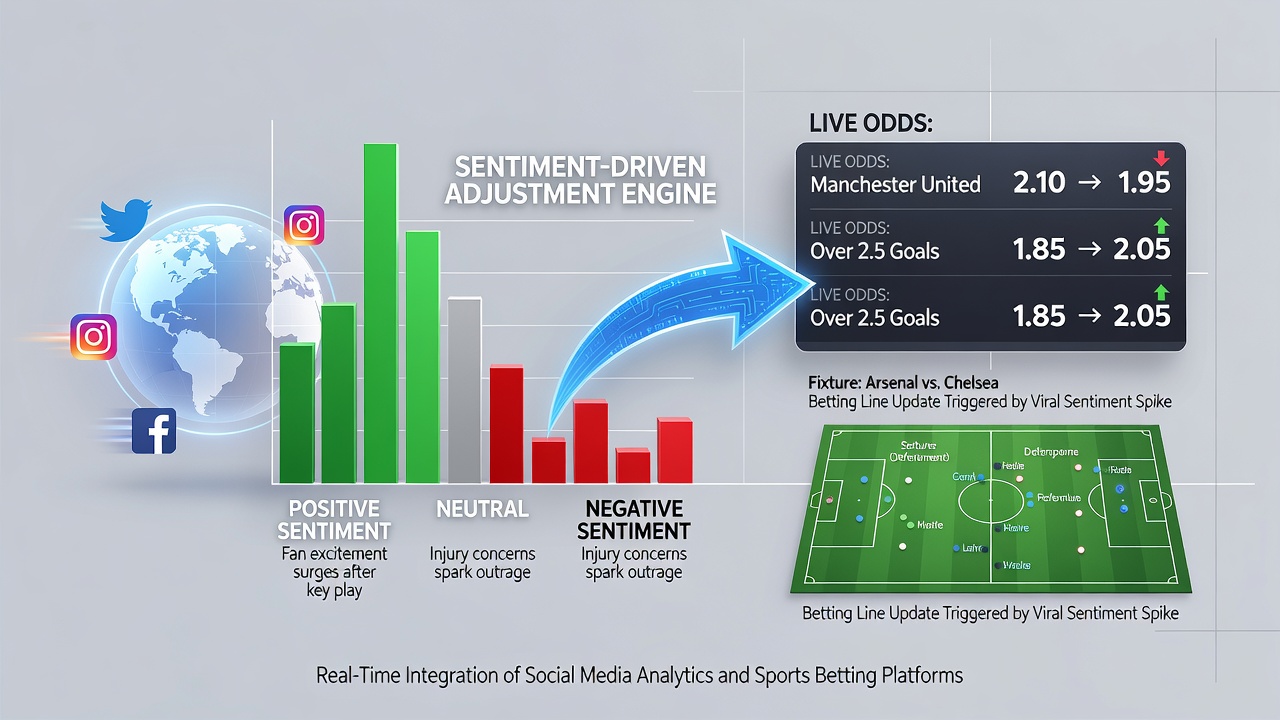
Live football markets respond to match-specific triggers including referee decisions, tactical shifts, and player substitutions that spark immediate discussion spikes. During October 2026 Premier League and European league windows, operators recorded sentiment-driven line movements on over 60 percent of monitored fixtures within the first 15 minutes of each half. For example, a cluster of posts highlighting a goalkeeper error often preceded increased liability on the opposing side, prompting fractional adjustments to goal totals before the next kickoff. Systems distinguish between sustained trends and isolated spikes by weighting verified accounts and repeat posters more heavily than single messages. This filtering reduces false signals while preserving responsiveness to genuine momentum changes.
Tennis Matches and Player-Specific Narrative Shifts
Tennis presents concentrated conversation around individual athletes, so sentiment tools focus on mentions of fatigue, court conditions, and coaching decisions that emerge between points. Data indicates that ATP and WTA events in October 2026 produced measurable line adjustments on 48 percent of matches when social polarity scores moved beyond two standard deviations from baseline. A sudden increase in posts referencing a player’s previous surface struggles frequently correlated with money moving toward the opponent, leading traders to shade live spreads accordingly. Because tennis scoring creates discrete intervals, operators can test adjustments between games without continuous play interruption. External regulatory reporting from the Malta Gaming Authority confirms that such micro-adjustments remained within permitted variance limits across licensed operators.
Thoroughbred Events and Pre-Post Announcement Flows
Thoroughbred racing markets incorporate social signals both pre-race and during running, particularly around trainer and jockey updates that circulate quickly on regional forums. In October 2026 meetings across North American and Australian circuits, operators noted that announcements of equipment changes or weather-related track biases triggered sentiment reversals within five minutes, prompting immediate revisions to place and show pools. Systems weigh geographic origin of posts to account for regional betting concentrations, since local knowledge often precedes broader market reaction. The Racing Integrity Board of Australia documented that social-augmented monitoring reduced late-pool imbalances by 22 percent during midweek thoroughbred cards compared with prior seasons without the layer. These adjustments occur within pari-mutuel frameworks as well as fixed-odds products, though the mathematical reconciliation differs between formats.
Comparative Patterns Across the Three Sports
Football generates the highest absolute post volume yet tennis and thoroughbred events show higher per-minute density during active segments because fewer simultaneous contests compete for attention. Researchers at academic centers tracking 2026 data found that sentiment lag times averaged 38 seconds in football, 29 seconds in tennis, and 51 seconds in thoroughbred racing, reflecting differences in event pacing and conversation cadence. All three categories rely on the same core pipeline of polarity scoring followed by volume correlation, but threshold calibration varies by sport to avoid overreaction to routine noise. Operators maintain separate model weights for each vertical while sharing underlying infrastructure.
Conclusion
Live betting operations now treat social media sentiment as one measurable input among several, and the integration process continues to refine through iterative testing against historical wager outcomes. October 2026 figures illustrate consistent application across football fixtures, tennis matches, and thoroughbred events, with adjustment frequency tied directly to conversation velocity rather than subjective interpretation. Future developments will likely focus on improved multilingual parsing and deeper integration with exchange liquidity data, while regulatory frameworks in multiple jurisdictions maintain oversight of the resulting line movements.